

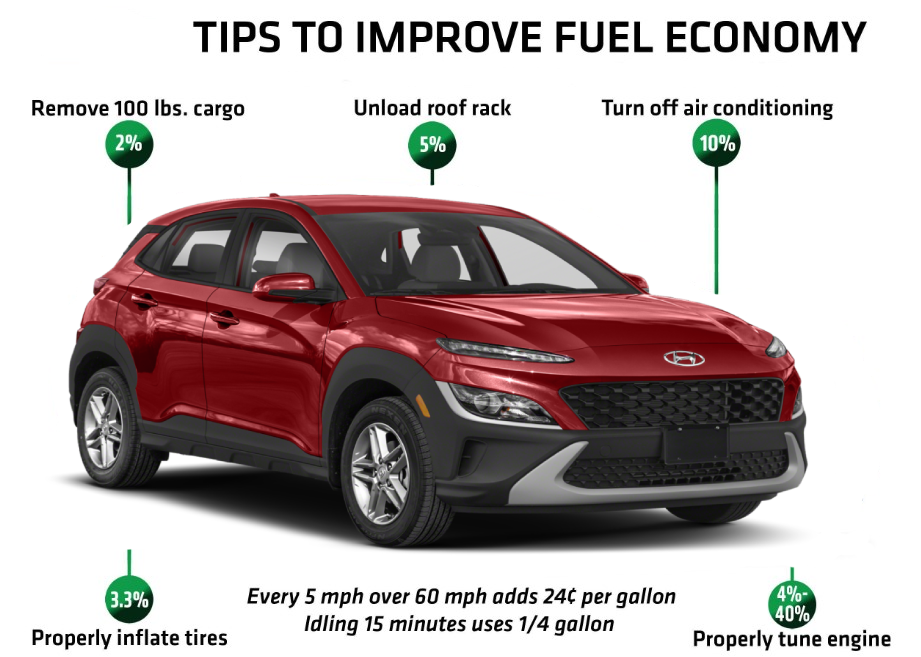
Tips On How To Maximize Your Fuel Efficiency
Here are some tips on how to maximize your fuel efficiency:
Plan Your Trips
Map a route before you go to minimize unnecessary backtracking. Avoid peak traffic times. Combine errands and go to "one stop shops” where you can do multiple tasks at once. (ie: shopping centers that have the grocery store and bank, etc).
Minimize Unnecessary Weight
Remove items such as salt, sand and sports equipment from your vehicle. The less it weighs, the less fuel your vehicle will use. The fuel consumption of a mid-size car increases by about 1% for every 55 pounds of weight it carries.
You can also streamline your vehicle by taking off the racks when you’re not using them. Aerodynamic drag can increase fuel consumption by as much as 20% on the highway.
Use A/C Sparingly
Air conditioning can increase a vehicle’s fuel consumption by up to 20%. Open the windows when driving in the city, and use the flow-through ventilation system with the windows up on the highway. If you must use air conditioning, select the recirculation option to minimize its impact.
Keep an Eye on Your Tire Pressure
Driving with underinflated tires—by as little as 56 kilopascals (8 pounds per square inch)—can increase fuel consumption by up to 4% and reduce tire lifespan by more than 6,200 miles.
Drive to Warm the Engine
In cold temperatures, start the engine and drive normally to warm it up. Driving brings the engine to operating temperature more quickly, which saves fuel.
Use Cruise Control
Maintaining a consistent speed on the highway improves fuel efficiency. However, never use cruise control on slippery roads, as it could cause a loss of vehicle control.
Avoid Excessive Idling
A car engine consumes between one-quarter and one-half gallon of fuel per hour while idling. However, a warm engine requires only about 10 seconds’ worth of fuel to restart.
Where safe, turn off your engine if you will be stopped for more than a minute.
Watch Your Speed & Drive Conservatively
Fuel economy peaks at around 50 mph for most cars and decreases at higher speeds. Reducing highway speeds by 5 to 10 mph can improve fuel economy by 7 to 14%.
Avoid "jackrabbit" starts, rapid acceleration, and hard braking, as these can lower fuel economy by 15 to 30% on highways and by 10 to 40% in stop-and-go traffic.
Have more questions?
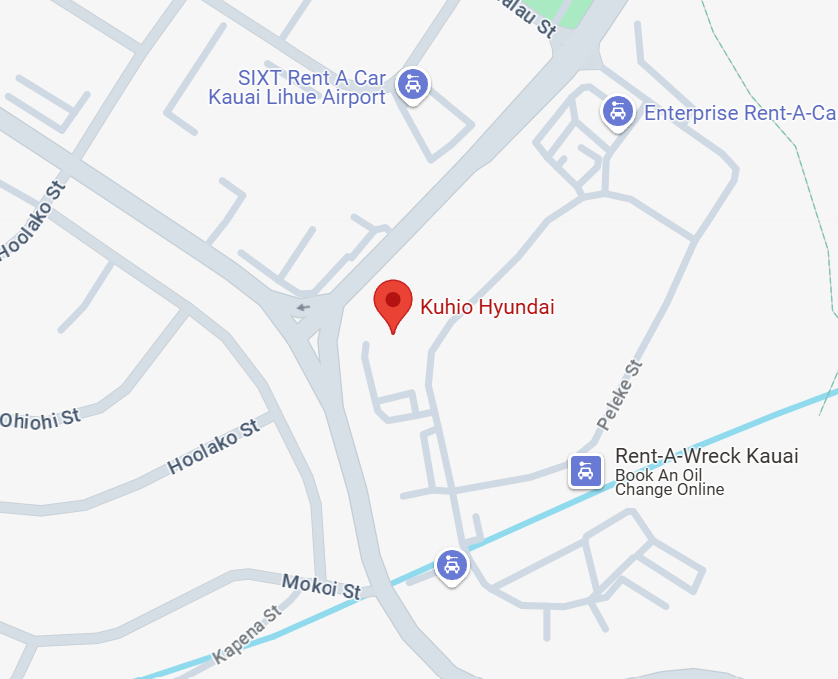
Kuhio Hyundai
Address
3033 Aukele Street
Lihue, HI 96766
Phone
- Sales 808-465-2611
- Service 808-465-2617
- Parts 808-245-3364
| Monday | 8:00AM - 6:00PM |
| Tuesday | 8:00AM - 6:00PM |
| Wednesday | 8:00AM - 6:00PM |
| Thursday | 8:00AM - 6:00PM |
| Friday | 8:00AM - 6:00PM |
| Saturday | 9:00AM - 5:00PM |
| Sunday | Closed |
| Monday | 7:30AM - 5:00PM |
| Tuesday | 7:30AM - 5:00PM |
| Wednesday | 7:30AM - 5:00PM |
| Thursday | 7:30AM - 5:00PM |
| Friday | 7:30AM - 5:00PM |
| Saturday | Closed |
| Sunday | Closed |
| Monday | 7:30AM - 5:00PM |
| Tuesday | 7:30AM - 5:00PM |
| Wednesday | 7:30AM - 5:00PM |
| Thursday | 7:30AM - 5:00PM |
| Friday | 7:30AM - 5:00PM |
| Saturday | Closed |
| Sunday | Closed |